


Iconography of Dance in the Middle Ages
International Research Group
Universitat Rovira i Virgili, Tarragona
ICONODANSA
PROJECTE DANAEM

PROJECTE HECO

PROJECTE MUDANSA
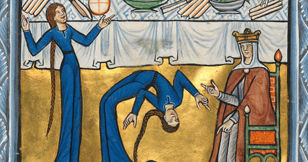
The depictions of unbridled dances in the churches create heterotopic spaces around them conforming to the social rules and their transgression, from the concept of the other as possessed, as distinct, as belonging to the uncontrolled world of the mental illness. Paradoxically, these negative characters have a sacred counterpart in ritual possessions, visions and sacred dances. Dance, as well as all kinds of magical-apotropaic processes, is the centrepiece of the heterotopic space. Similarly, dance and its magic power end up acting as the engine of history in the courtly novel. Dance is a necessary condition for the protagonists to accomplish and develop their drama. The extraordinary evocative power of dance as an enchantment in fact runs through the entire Mediterranean culture from the Greeks and comes to develop to folkloric manifestations such as the Tarantella. Featuring Dances of Death, Carola Magic, hagiographic miracles, episodes of possessions, it reveals its ritual essence especially in the literary field. In all of these cases, dance is created in places of difference that, as such, contribute to the ongoing dialogue established during the Middle Ages between cultures in historical or literary places.


